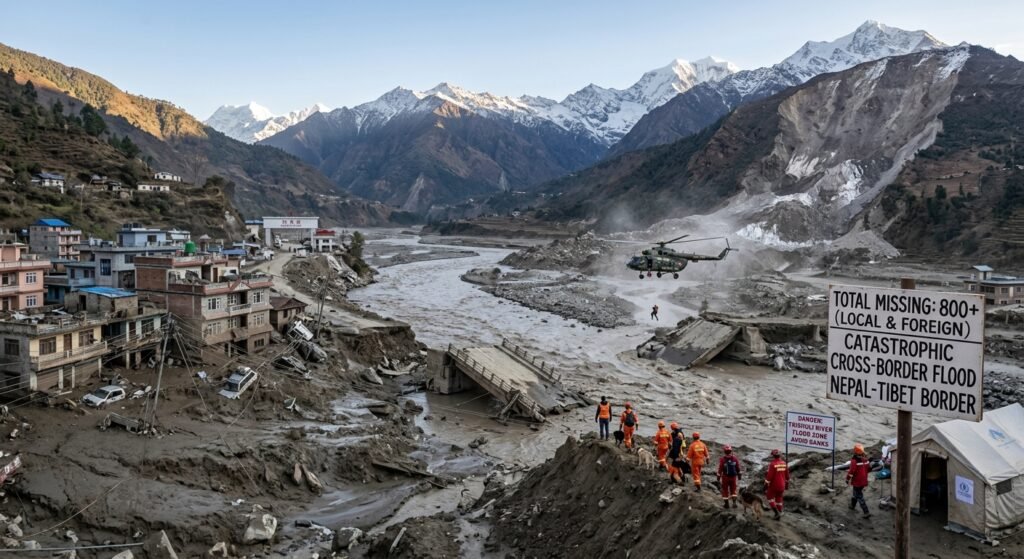
A glacier collapse in the Himalayas has triggered devastating flash floods along the Nepal-Tibet border, leaving more than 800 people missing in Nepal alone and at least 160 confirmed dead across both countries.
A massive glacier collapse high in the Himalayas has unleashed catastrophic flash flooding along the Nepal-Tibet border, leaving more than 800 people missing in Nepal and hundreds more unaccounted for across the border in China, in what officials are calling one of the region’s most devastating natural disasters in years.
What Triggered the Disaster
The catastrophe began at approximately 8:40 a.m. local time on Wednesday, when a substantial section of the lower end of a glacier broke away at an elevation of roughly 5,200 meters (17,000 feet) in the Himalayas. Satellite imagery showed the ice mass plunged about 1,200 meters (3,900 feet) down to the valley floor, gathering rock and sediment as it fell.
The resulting ice-rock avalanche struck Tibet’s Lhende River, roughly 20 kilometers (12 miles) northeast of the Nepal-China border crossing. The debris temporarily dammed the river before that natural barrier gave way, unleashing a powerful flood downstream that tore through mountainous communities on both sides of the border.
Early reports had suggested a magnitude 4.4 earthquake triggered the collapse, but the US Geological Survey later revised that assessment, clarifying that the seismic signal detected had actually been generated by the landslide itself, not a separate earthquake. The USGS has since characterized the event as a “glacial collapse and debris flow.”
The Scale of the Missing and Dead
The human toll remains genuinely staggering, and figures continue to shift as search efforts unfold. In Nepal alone, authorities say 826 people are currently missing, including nearly 600 foreign nationals. At least 165 bodies have been recovered in the country so far, according to the BBC, with rescue efforts significantly complicated by ongoing rain and extremely difficult mountainous terrain.
Across the border in Tibet’s Gyirong County, Chinese state media has reported 558 people missing, including 260 foreign nationals, with at least three confirmed deaths on that side of the border. It remains unclear whether any of these figures overlap between the two countries’ reporting.
Combined, more than 1,300 people are currently listed as missing across both nations, with over 160 confirmed dead overall as of the most recent updates — though officials caution that toll is likely to rise as search operations continue.
A Disaster With International Reach
The scale of foreign nationals affected has turned this into a story with genuine global reach. Nepal’s tourism officials have confirmed that the missing include more than 100 tourists from India, 54 from the United States, and 33 from the United Kingdom, reflecting how popular the Himalayan region remains as a trekking and tourism destination, even amid the risks posed by its increasingly unstable glacial terrain.
Rescue Efforts Struggling Against the Terrain
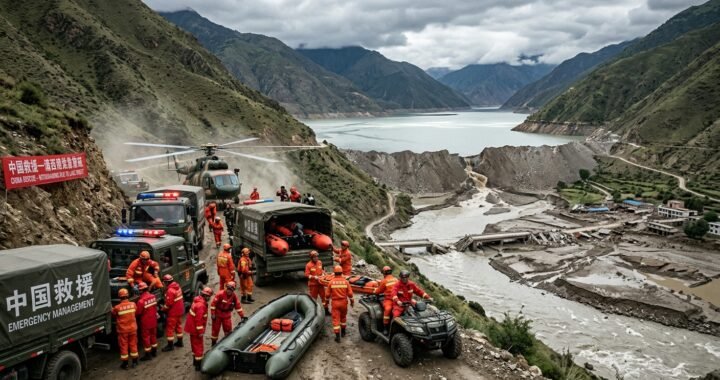
Search and rescue operations have been hampered significantly by the disaster’s remote, high-altitude location. In Nepal, rescue helicopters have struggled to land in the worst-affected areas due to persistently high floodwaters. Across the border, Chinese emergency responders faced their own obstacles, contending with major road blockages caused by mud and debris on their way to the disaster zone.
Roughly 22 hours after the initial collapse, Chinese emergency teams finally reached Gyirong Port, a critical trade facility that normally handles nearly a third of all China-Nepal trade. The first wave of 141 rescuers arrived at the site alongside a high-altitude Mi-171 helicopter, beginning the difficult work of searching through the wreckage for survivors.
A Region Bracing for Further Danger
Compounding the crisis, Chinese authorities have warned of a potential secondary disaster, with more rain forecast for Gyirong County in the days ahead. According to state broadcaster CCTV, the region is already highly prone to landslides, mudslides, and flash flooding, raising concerns that ongoing rescue efforts could face renewed danger even as they work to locate those still missing from Wednesday’s initial collapse.
International Response
The scale of the disaster has prompted an international response. The European Union and India have both announced plans to send humanitarian aid to the affected region, as the international community moves to support Nepal and China’s ongoing rescue and recovery efforts.
A Warning Sign for a Warming Himalayan Region
While the immediate priority remains locating those still missing, this disaster is already drawing attention to broader questions about the stability of Himalayan glaciers amid a rapidly warming climate. Glacial collapses of this scale, capable of triggering catastrophic downstream flooding with little warning, represent a growing risk factor for communities and infrastructure throughout the region — a concern that’s likely to intensify scrutiny of climate-related glacial monitoring and early-warning systems in high-risk mountain areas going forward.
What Happens Next
With search and rescue operations still very much underway on both sides of the Nepal-Tibet border, and hundreds of people still unaccounted for, officials in both countries are bracing for the confirmed death toll to rise further in the coming days. The combination of difficult terrain, ongoing weather risks, and the sheer number of people still missing suggests that fully understanding the human cost of this disaster will likely take considerable time, even as emergency crews continue working against the elements to reach those still trapped or unaccounted for.
Frequently Asked Questions
Q: What caused the flash flooding in Nepal and Tibet? A section of a Himalayan glacier collapsed at an elevation of roughly 5,200 meters, falling into a valley and striking Tibet’s Lhende River. The resulting debris temporarily dammed the river before giving way and releasing a powerful flood downstream.
Q: How many people are missing in Nepal? Nepal has reported 826 people missing, including nearly 600 foreign nationals, with at least 165 bodies recovered in the country so far.
Q: Was an earthquake responsible for the glacier collapse? No. While early reports suggested a magnitude 4.4 earthquake triggered the collapse, the US Geological Survey later clarified that the seismic activity detected was actually caused by the landslide itself.
Q: How many foreign tourists are affected by the disaster? Nepal’s tourism officials report missing tourists include more than 100 from India, 54 from the United States, and 33 from the United Kingdom, among others.
Q: Is there still danger of further flooding or landslides in the region? Yes. Chinese authorities have warned of a potential secondary disaster, with additional rain forecast for the affected Gyirong County region, an area already prone to landslides, mudslides, and flash flooding.