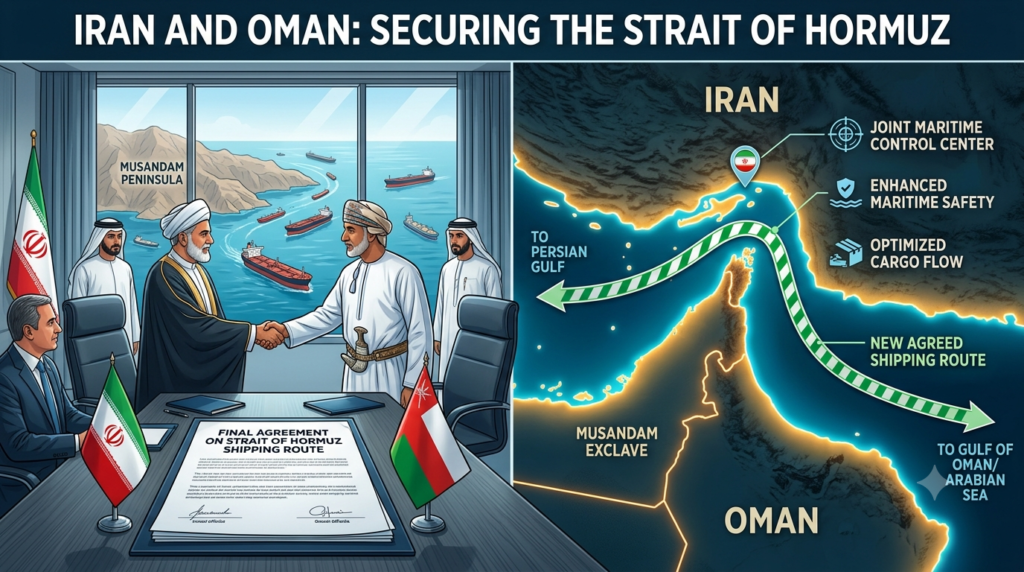
Iran has announced it has reached an agreement with Oman on a proposed shipping route through the Strait of Hormuz, one of the world’s most critical oil and gas corridors. Iranian foreign ministry spokesman Esmaeil Baqaei confirmed the coordinates for the route have been finalized with Oman, though he stopped short of sharing further specifics, describing the agreement as being in its closing stages.
Baqaei was quick to add a caveat: even with a route agreed, safe passage through the strait isn’t guaranteed. He pointed to the ongoing US naval blockade of Iranian ports as a continuing security risk for vessels attempting to transit the area.
Why the Strait Matters
The Strait of Hormuz normally carries around a fifth of the world’s oil and liquefied natural gas shipments. Since the US and Israel struck Iran in February, Tehran has largely kept the strait closed, causing major disruption to global energy markets. Oil prices have swung sharply throughout the conflict, though Brent crude dipped slightly on Thursday, trading near $79 a barrel.
Trump Warns Iran to Reopen the Strait
President Trump has ramped up pressure on Tehran, warning that Iran will face serious consequences if the strait doesn’t reopen soon. His comments followed reports from senior US officials suggesting shipments could potentially resume within days. Iran, however, continues to insist it is not in direct negotiations with Washington.
A Temporary Route, Not a Full Reopening
According to Iran’s Deputy Foreign Minister Kazem Gharibabadi, the new shipping route would only be temporary, likely staying open for two to four months. Details on how it would operate remain unclear.
Money is also a sticking point. Iran reportedly wants to charge ships a fee of 5–7% of their cargo value to use the strait, while Oman has floated a lower figure around 3%. The US, for its part, is pushing for no fees at all. Reports also suggest the arrangement would give Iran a degree of control over vessels entering the Gulf through the strait.
A Fragile History of Talks
This isn’t the first attempt at a resolution. Back in June, Iran and the US signed a memorandum of understanding aimed at ending hostilities and reopening the strait within 60 days — but the agreement collapsed almost immediately, with attacks resuming just days later. The US still maintains a naval blockade on Iranian ports, while Yemen’s Houthi forces have separately blockaded Saudi ports in the Red Sea since late July.
Leadership in the Background
The conflict has also left Iran’s leadership in an unusual position. Supreme Leader Ayatollah Ali Khamenei was killed in the February strikes and succeeded by his son, Mojtaba Khamenei, who was himself wounded in the same attack and has not appeared publicly since. Iranian President Masoud Pezeshkian acknowledged this week that communication with the new supreme leader has been difficult, while pushing back on speculation about strained relations within the government.
As talks continue, the reopening of the Strait of Hormuz remains one of the clearest signals of whether the broader conflict is moving toward de-escalation — or simply pausing for now.