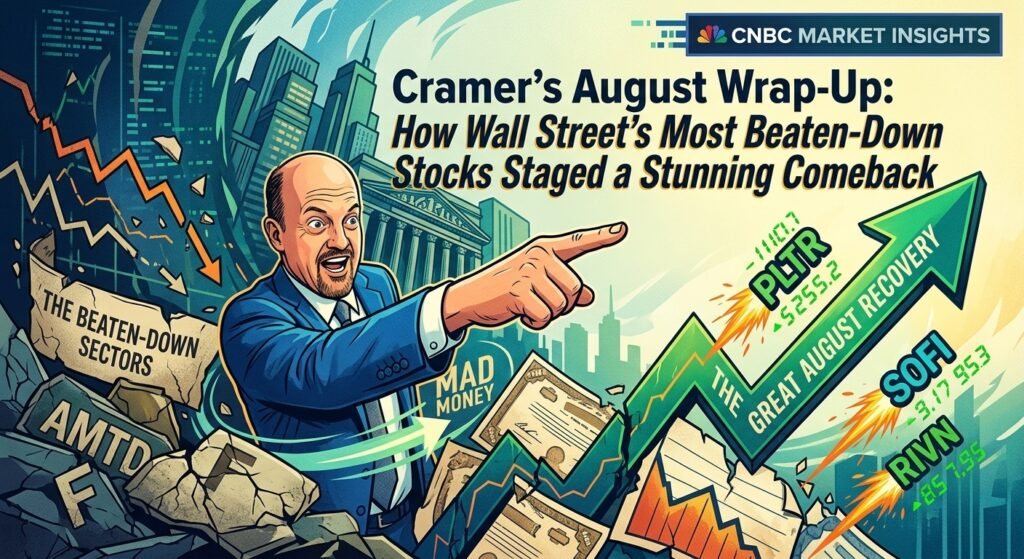
Jim Cramer says August was defined by “comeback kids” — stocks battered by AI disruption fears and slowing growth narratives that rebounded sharply as improving fundamentals won out.
As August drew to a close, CNBC’s Jim Cramer had a clear theme for the month: comebacks. Speaking on the final trading day of the month, Cramer argued that some of the S&P 500’s biggest winners in August were companies that had spent much of the year under serious pressure, only to stage sharp, fundamentals-driven rebounds once the market’s most powerful bearish narratives started losing steam.
Moderna Leads the Pack With a Genuine Scientific Surprise
Topping Cramer’s list of August’s standout performers was Moderna, which led the entire S&P 500 for the month after announcing encouraging results for an experimental melanoma vaccine developed in partnership with Merck. The news mattered well beyond a single product line — it directly challenged growing skepticism about whether Moderna’s core mRNA technology still had another major breakthrough left in it.
“This is miraculous, so it got a miraculous welcome,” Cramer said of the market’s reaction. The turnaround is especially notable given Moderna’s recent history: shares had spent years under sustained pressure as pandemic-era demand for its Covid-19 vaccine steadily faded, leaving investors with real doubts about what would drive the company’s next chapter of growth.
Enterprise Software Stages a Dramatic Recovery
Beyond Moderna, Cramer pointed to enterprise software as the sector responsible for many of August’s other big rebounds. He framed the broader recovery against an unusual backdrop: “As August comes to a grinding end, it’s hard to believe that the reverberations of a hedge fund implosion could color so much of the month’s action,” he said, referencing how much earlier market turbulence had weighed on software valuations before the sector’s sharp turnaround.
Palantir was among the names Cramer highlighted specifically, arguing that its earlier decline never really made sense given the company’s combination of strong revenue growth and genuine profitability — a pairing that’s relatively rare among high-growth software names, and one Cramer suggested the market had simply mispriced during the earlier downturn.
Salesforce also rebounded sharply in August, following a strong quarterly report that helped undercut fears of what had been dubbed the “SaaSpocalypse,” a narrative suggesting AI tools could fundamentally undermine demand for traditional enterprise software platforms.
ServiceNow delivered its own comeback story by demonstrating it could successfully integrate AI capabilities directly into its existing business, easing investor concerns that the company might struggle to adapt to the same AI-driven disruption threatening other software players.
Veeva Systems, which focuses on the life sciences industry, joined the broader software rebound as well, after fears that AI would meaningfully disrupt its specialized business proved overblown once the company’s actual results came in.
Summing up the scale of the software sector’s turnaround, Cramer didn’t mince words: “The comeback in software from incredibly depressed levels was breathtaking.”
Gartner Rebounds From AI-Disruption Fears of Its Own
Rounding out Cramer’s list, Gartner joined the broader software rebound after previously being hit hard by concerns that AI models, specifically citing Anthropic’s Claude, could reduce demand for the kind of technology research Gartner has traditionally provided to enterprise clients. Like several of the other names on Cramer’s list, Gartner’s recovery reflected a pattern that played out repeatedly throughout August: stocks initially punished by broad, sweeping AI-disruption narratives, only to rebound once actual company performance demonstrated those fears were overstated, at least for now.
A Common Thread Across August’s Winners
What ties these comeback stories together, according to Cramer, is a shift from narrative-driven selling to fundamentals-driven buying. Each of these companies had been weighed down earlier in the year by broad, sector-wide concerns, whether about AI replacing their core business, slowing growth, or spillover effects from unrelated market turbulence like the hedge fund implosion Cramer referenced. In each case, actual company results ultimately proved strong enough to override those earlier fears, driving some of the sharpest single-month rebounds of the year.
Why This Matters Heading Into September
Cramer’s broader takeaway carries a lesson that extends beyond any single stock: markets can move quickly on narrative and sentiment, sometimes punishing fundamentally sound companies based on sector-wide fears that don’t hold up once real earnings data arrives. For investors, August’s pattern, sharp rebounds in previously battered names once fundamentals reasserted themselves, offers a reminder that separating genuine business risk from broader market narrative can be just as important as reacting to headlines in real time.
Frequently Asked Questions
Q: Which stock led the S&P 500 in August, according to Cramer? Moderna led the index in August, driven by encouraging results from an experimental melanoma vaccine developed with Merck, which challenged doubts about the company’s mRNA technology platform.
Q: Why did enterprise software stocks rebound so sharply in August? Cramer attributed the rebound to companies like Palantir, Salesforce, ServiceNow, and Veeva proving that fears around AI disruption and slowing growth were overstated, once their actual quarterly results demonstrated continued strength.
Q: What is the “SaaSpocalypse” Cramer referenced? It’s a narrative suggesting AI tools could significantly undermine demand for traditional enterprise software platforms. Salesforce’s strong quarterly results helped undercut this fear during its August rebound.
Q: Why had Gartner’s stock been under pressure before its rebound? Gartner had faced concerns that AI models, including Anthropic’s Claude, could reduce demand for the technology research services the company traditionally provides to businesses.
Q: What is Cramer’s broader takeaway from August’s market action? Cramer’s central point is that several 2026 stocks had been punished by broad bearish narratives around AI disruption and slowing growth, only to rebound sharply once improving fundamentals demonstrated those fears were overblown.