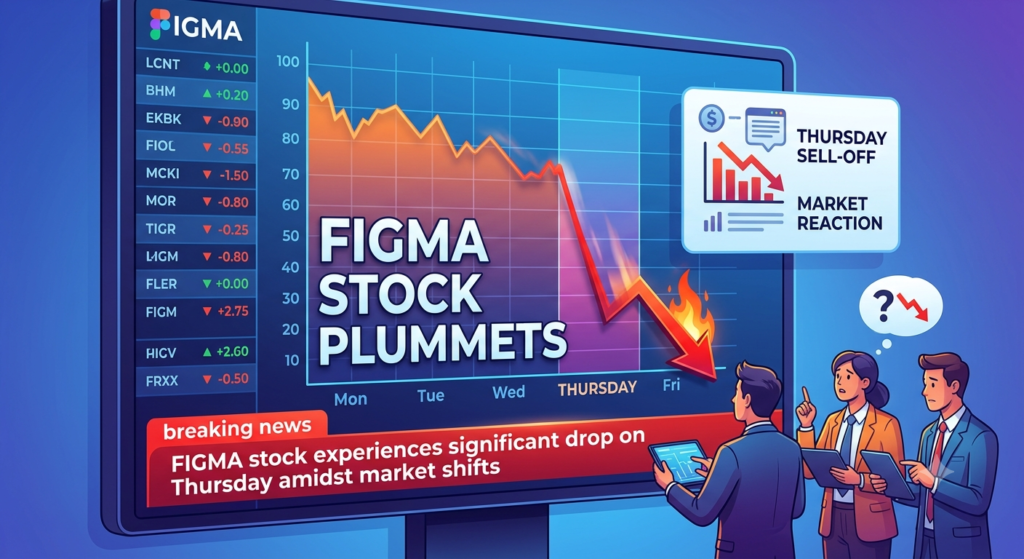
Figma stock dropped over 14% Thursday despite a strong earnings beat. Here’s the real reason investors sold off shares — and what it means going forward.
If you only glanced at Figma’s headline numbers this week, you’d assume the stock was having a great day. Revenue beat expectations. Earnings per share came in well above forecasts. The company raised its full-year guidance. And yet, shares plummeted more than 14% on Thursday. This is what traders call a “beat-and-sell” — and Figma’s latest quarter is quickly becoming a textbook example of it.
So what’s actually going on here? The short answer: strong results weren’t the problem. Weak forward guidance and lingering fears about AI competition were.
The Numbers Were Genuinely Good
Let’s start with what Figma actually delivered. The design and collaboration software company reported second-quarter revenue of roughly $370 million, comfortably ahead of analyst expectations near $352 million. That marks a 48% jump year-over-year — an acceleration, not a slowdown, and notably the company’s third consecutive quarter of accelerating revenue growth.
Profitability told a similarly encouraging story. Adjusted earnings per share came in around eight cents, double what analysts had penciled in. The company also generated tens of millions of dollars in free cash flow during the quarter, a sign that its growth isn’t coming at the expense of financial discipline.
CEO Dylan Field struck an optimistic tone following the release, framing the results around a broader shift in the software industry — one where basic code-writing is becoming commoditized and value is shifting toward higher-level design and product decisions, an area Figma believes it’s positioned to own.
Then Why Did the Stock Fall So Hard?
The disconnect comes down to guidance. While Figma’s third-quarter revenue outlook of roughly $373 million to $375 million technically topped Wall Street’s consensus, it implies a meaningful deceleration from the 48% growth rate the company just posted. Investors who had been pricing in continued acceleration were caught off guard by signs of a slowdown, even a modest one.
There’s also a cost story buried in the details. Figma flagged rising AI inference spending — the ongoing expense of running the AI-powered tools now built into its platform. As more of the company’s product experience leans on AI features, the cost of delivering those features in real time is becoming a bigger line item, and investors are watching closely to see how that affects margins going forward.
Figma wasn’t alone in this reaction, either. Several other software companies reporting earnings this week — including Datadog and HubSpot — also saw double-digit stock declines despite beating estimates. That’s a signal this isn’t purely a Figma-specific story. The broader software sector has been trying to claw back from steep declines earlier in the year, and investors are currently scrutinizing every earnings report through a skeptical lens, wary that AI could fundamentally disrupt how these companies make money.
The AI Competition Question Hasn’t Gone Away
Figma’s stock volatility this year has a longer backstory than just one earnings report. Shares lost roughly half their value in the first six months of 2026, even as the company posted strong quarterly results throughout that stretch. The reason wasn’t the numbers — it was fear. Specifically, fear that AI-native design tools could eventually make traditional design software less essential, threatening Figma’s long-term position even if its current business remains healthy.
That concern hasn’t disappeared with this latest report. If anything, Thursday’s guidance-driven selloff suggests investors are still trying to figure out whether Figma’s AI integration is a genuine growth driver or simply a necessary, margin-eating response to competitive pressure. On a more encouraging note, Figma did report that a large majority of its bigger paid customers are actively using AI credits on a weekly basis, and net dollar retention has remained strong — both signs that customers aren’t abandoning the platform, at least not yet.
Where the Stock Stands Now
From a technical standpoint, Thursday’s drop pushed Figma’s shares back below several short-term moving averages, reversing some of the modest recovery the stock had been building over recent months. The longer-term picture still shows plenty of damage — shares remain well below their level from a year ago, even after some recent stabilization.
None of that means the underlying business is in trouble. Figma continues to add high-value customers, revenue continues to grow at a rapid clip, and management continues to raise guidance rather than cut it. But in a market currently obsessed with what AI might do to established software companies, “good enough” earnings apparently aren’t enough to satisfy investors who are bracing for disruption before it happens.
The real test now shifts to execution. If Figma can show over the next few quarters that its AI features are driving deeper customer engagement rather than just adding cost, sentiment could shift back in its favor. Until then, expect the stock to stay sensitive to every signal — good or bad — about how AI is reshaping the design software category.
Tags: Figma stock, FIG stock, Figma earnings, software stocks, AI competition, Dylan Field, tech stocks 2026, Datadog earnings, stock market news, growth stocks
FAQs
1. Why did Figma stock fall despite beating earnings estimates? Figma’s actual quarterly results beat expectations on revenue and earnings, but its forward guidance implied slower growth than investors had anticipated, triggering a sharp selloff — a pattern known as a “beat-and-sell.”
2. How much did Figma stock drop? Figma shares fell more than 14% on Thursday following the earnings release, with some reports showing an even steeper drop in pre-market trading.
3. Is Figma’s business actually struggling? Not based on the reported numbers. Revenue grew 48% year-over-year, earnings per share doubled analyst forecasts, and the company raised its full-year revenue guidance.
4. Why are investors worried about Figma’s AI costs? Figma disclosed rising AI inference spending — the cost of running AI features built into its platform — which has raised questions about how AI integration will affect the company’s profit margins over time.
5. Is Figma the only software stock that fell this week? No. Other software companies, including Datadog and HubSpot, also saw double-digit percentage declines this week despite reporting earnings beats, suggesting a sector-wide trend rather than a Figma-specific issue.
6. What is the bigger concern behind Figma’s stock volatility this year? Investors have been worried that AI-native design tools could eventually reduce the need for traditional design software, creating a long-term competitive threat that isn’t yet reflected in Figma’s current financial performance.