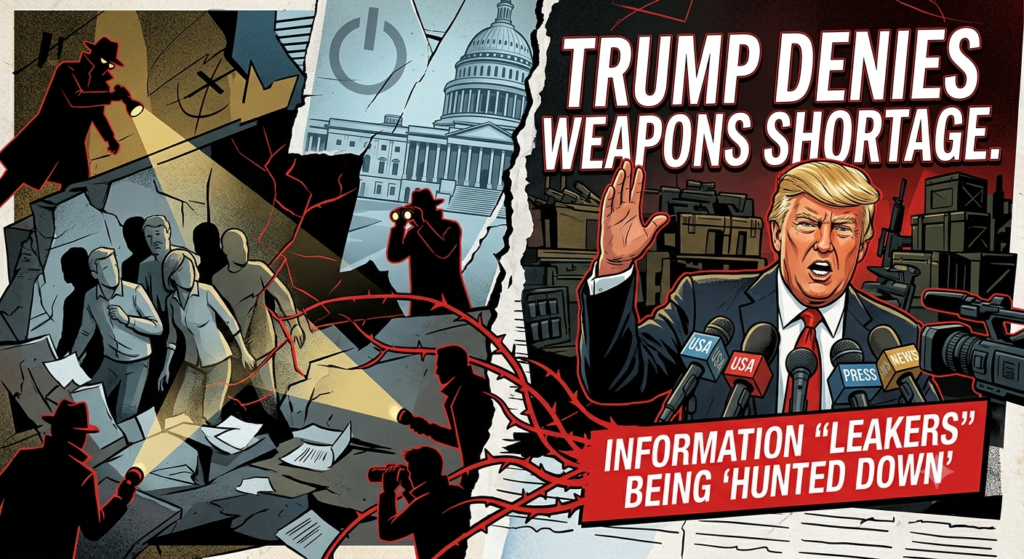
President Trump denied reports of a U.S. weapons shortage tied to the Iran conflict and warned that leakers face jail time. Here’s what’s known so far.
A war of words is playing out between the White House and several major news outlets this week, centered on a question with real strategic stakes: does the United States actually have enough long-range munitions to sustain its current military posture in the Middle East?
President Trump says the answer is a clear yes. In a social media post Thursday, he dismissed a string of reports claiming the U.S. had significantly drawn down its stockpile of precision missiles during the ongoing conflict with Iran, insisting the country’s supply remains substantial and that production is ramping up rapidly. He went further, suggesting that whoever leaked information suggesting otherwise would be identified and prosecuted, describing the reports as damaging and pledging that lengthy prison sentences would be pursued against those responsible.
What the Reports Actually Said
The controversy traces back to multiple independent reports published this week by several major news organizations, each citing sources with direct knowledge of U.S. military logistics. The consistent claim across these reports: the United States has used nearly all of its available stock of certain long-range precision weapons — specifically Army Tactical Missile Systems and Precision Strike Missiles — during the sustained campaign against Iran. Some reporting also pointed to steep depletion of air-defense interceptor systems, suggesting the shortage extended beyond offensive missile stockpiles into defensive capability as well.
Separately, a widely cited report claimed that concerns over dwindling munitions played a role in the administration’s decision to hold off on additional strikes against Iran, despite earlier signals that a tougher response was being considered. Another report described a tense exchange between the president and Defense Secretary Pete Hegseth over the issue during a Cabinet meeting, with the president reportedly expressing frustration that he had been given inaccurate information about the state of the stockpile.
The White House Response
The administration has pushed back hard on nearly every element of this narrative. White House Press Secretary Karoline Leavitt directly disputed the account of a tense confrontation between the president and the defense secretary, stating she was present for the meeting in question and that the described exchange simply did not happen. She characterized the reporting as inaccurate.
Defense Secretary Hegseth has also previously rejected shortage claims, telling a national news outlet earlier this summer that such stories were manufactured and that the country’s military stockpiles remain strong and continuing to grow.
Trump’s own statement reinforced that position, emphasizing that the U.S. holds large quantities of munitions, particularly certain specialized types, and that additional supplies are actively being manufactured and delivered as needed. He also pointed to what he described as historic levels of new defense manufacturing capacity currently under construction across the country.
A Pattern of Targeting Leaks
This isn’t the first time the administration has moved aggressively to identify sources behind unflattering reporting. Last month, the Department of Justice issued subpoenas to several reporters at a major national newspaper, seeking testimony and phone records related to earlier reporting on security concerns tied to a foreign-donated aircraft the president had been using. That particular investigation was ultimately dropped, but it illustrates a broader pattern: when reporting emerges that the administration disputes, the response frequently includes an effort to uncover and pursue the individuals who provided the underlying information, rather than solely disputing the substance of the reporting itself.
That approach has drawn criticism from press freedom advocates, who argue that aggressively pursuing leakers — particularly through tools like subpoenas for journalists’ records — can have a chilling effect on the flow of information the public relies on, especially around military and national security matters where independent verification is difficult. Supporters of the administration’s approach counter that unauthorized disclosures of sensitive military logistics information carry genuine national security risks and that identifying the source of such leaks is a legitimate government function, particularly during an active conflict.
Why This Dispute Matters
Beyond the political back-and-forth, the underlying question carries real weight. Precision-guided long-range missiles and air-defense interceptors are expensive, complex to manufacture, and take considerable time to replenish once stockpiles are drawn down. If the reports proving accurate, it could constrain the range of military options available to the administration in any future escalation, and would likely fuel broader debate in Washington about defense industrial capacity and the pace at which the U.S. can restock advanced weaponry during a prolonged conflict.
At the same time, if the administration’s denials hold up, it would suggest that recent reporting significantly overstated the situation, and the current back-and-forth would become another data point in the ongoing tension between government officials and the press over how sensitive national security information reaches the public.
For now, the two sides remain firmly at odds, and independent confirmation of the actual state of U.S. munitions stockpiles isn’t something available to the public. What’s clear is that this particular dispute, layered on top of an already sensitive conflict with Iran, is likely to keep drawing scrutiny from lawmakers, defense analysts, and journalists in the days ahead.
Tags: Donald Trump, munitions shortage, Iran conflict, Pete Hegseth, press leaks, national security, White House, military stockpile, defense policy, government transparency
FAQs
1. Did President Trump deny reports of a U.S. weapons shortage? Yes. Trump stated on social media that the U.S. has substantial munitions stockpiles and dismissed reports claiming otherwise as inaccurate.
2. What weapons were reportedly running low? Multiple reports pointed to a significant depletion of Army Tactical Missile Systems, Precision Strike Missiles, and certain air-defense interceptor systems.
3. Why did these reports emerge? The claims followed sustained U.S. military activity connected to the ongoing conflict with Iran, which multiple outlets say has placed significant strain on long-range precision weapons stockpiles.
4. Did Trump say what would happen to whoever leaked this information? Yes. He said those responsible were being identified and that his administration would seek long-term jail sentences.
5. Has the White House disputed related reporting before? Yes. Last month, the Department of Justice subpoenaed journalists over separate reporting related to security concerns about a foreign-donated presidential aircraft, though that investigation was later dropped.
6. Is there independent confirmation of the actual state of U.S. munitions stockpiles? Not publicly. The dispute currently rests on conflicting accounts from anonymous government sources cited by news outlets versus public statements from the administration.